The Reality: Domestic Air Freight Is Detail-Driven
Domestic air freight within Australia usually doesn’t require the heavy document stack you see in international shipping. There’s no export declaration, no commercial invoice for customs clearance, and no import formalities between Sydney and Perth.
What you do need is clean, consistent information that allows the shipment to be accepted, tracked, screened, uplifted, and delivered without confusion. Think of it as “operational paperwork,” not bureaucracy.
The Essentials You Must Have
1) Consignment Details (The Core Record)
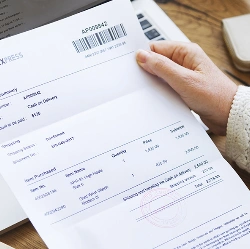
Whether it’s generated digitally or provided as a consignment note, you need a record that captures the shipment’s identity and routing. At minimum, ensure it includes:
- Shipper name and pickup address (suburb and postcode)
- Receiver name and delivery address (suburb and postcode)
- Contact phone numbers (receiver contact helps with delivery issues)
- Service level (express, priority, standard)
- Piece count (how many cartons, crates, or pallets)
- Weight and dimensions (ideally per piece)
- Contents description (plain language, not vague)
If any of these are missing or wrong, problems usually show up later as delivery holds, rework, or reweigh/remeasure adjustments.
2) Piece Labels (Every Piece, Not Just One)
Every carton, crate, or pallet needs a clear label. One label on “the main box” is not enough if you’re shipping multiple pieces.
Each label should include:
- Receiver name
- Delivery suburb, postcode, and ideally the full address
- Consignment or reference number (if available)
- Piece count marking (for example: 1 of 3, 2 of 3, 3 of 3)
- Any essential handling notes (fragile, keep upright)
Remove or cover old labels. Mixed labels are a common cause of misroutes and terminal confusion.
3) Special Handling Notes (Only What Matters)
Special handling notes help when they’re specific. Generic notes can be ignored. If something truly needs attention, state it clearly:
- Fragile (if packing is built for fragile handling)
- Do not stack (only when stacking will cause damage)
- Time critical (paired with the correct service level)
- Delivery appointment required (if the Perth site requires booking)
Keep it practical. Too many notes can slow down acceptance without improving outcomes.
What You Don’t Need for Most Domestic Shipments
For standard domestic movements within Australia, most shippers do not need:
- Commercial invoice for customs (no customs border between Sydney and Perth)
- Certificate of origin
- Export documentation
- Incoterms paperwork (useful for contracts, but not required for domestic uplift)
Those documents are common in international freight. For domestic air freight, accuracy of operational details matters far more.
The One Area That Can Add Extra Requirements: Restricted Items
Where domestic paperwork becomes more serious is when your freight includes restricted items or materials that may fall under dangerous goods rules. Common examples include:
- Lithium batteries (installed, packed with equipment, or loose)
- Aerosols (sprays, personal care products)
- Flammable liquids (some solvents, paints)
- Chemicals and cleaning agents
- Pressurised items
If these are present, you may need a correct declaration and specific packaging/marking practices. Undeclared restricted contents can result in screening holds or refusal at lodgement, regardless of service level.
If you’re unsure, describe contents clearly and ask the provider whether additional acceptance steps apply.
The Most Common Document Mistakes That Cause Delays
For Air Freight Sydney to Perth, these are the repeat offenders:
- Mismatched piece counts: booking says 2 cartons, but 3 show up
- Wrong suburb or postcode: causes delivery routing errors in Perth
- Vague contents: “parts” or “equipment” can trigger questions during screening
- Missing receiver phone: delivery fails when the driver can’t contact anyone
- Incorrect weights/dimensions: reweigh or remeasure changes chargeable weight and can slow processing
- Old labels left on cartons: mixed routing signals lead to confusion
Most of these are not “paperwork problems.” They are data quality problems.
A Clean Handover Checklist (Without the Overkill)
Before pickup or drop-off, do a fast check that prevents most document-related delays:
- Booking details match the freight: piece count, weight, dimensions
- Every piece is labelled: receiver, suburb/postcode, piece count
- Receiver contact is correct: phone number that will actually be answered
- Delivery notes are real: appointment, dock rules, access instructions
- Contents are described clearly: and restricted items are declared if relevant
If you do these five things, you dramatically reduce the chance of a preventable hold.
Commercial Tip: Better Inputs Create Better Quotes
If you’re requesting pricing for Air Freight Sydney to Perth, document accuracy also controls cost accuracy. When providers receive precise weights and dimensions per piece, the quote is more likely to match the final invoice.
When details are vague or estimated, the quote often shifts after receival due to remeasurements, delivery constraints, or special handling discovered after pickup.
Bottom Line
Domestic air freight doesn’t require a massive document pack. It requires clean, consistent shipment details: correct addresses, piece counts, weights and dimensions, clear labels on every piece, and honest content descriptions—especially if anything restricted is inside. Get those right and Air Freight Sydney to Perth runs faster, tracks cleaner, and delivers with fewer avoidable surprises.